

Chamber XXI is a microscopic τ-field playground. It renders τ-curvature microstructure, τ-torsion and a synthetic hyperfine response in a 4-pane layout, providing a visual analogue of magnetization-distribution effects and finite-size corrections in τ-field language.
The τ-Microstructure Spectral Chamber (τ-MSC) is a dedicated microscopic τ-field chamber inside the UNNS Empirical Testing Laboratory v0.4.2. It combines four synchronized panels: (1) a τ-field micro-chamber with radial shells and spiral microstructure; (2) a synthetic hyperfine spectrum; (3) an effective nuclear magnetization-distribution profile (Bohr–Weisskopf-like); (4) a diagnostic gauge cluster reporting ⟨κ⟩, ⟨τ⟩ and Eeff.
The goal is not to simulate a specific real molecule in detail, but to provide a τ-field template for how nuclear τ-curvature and τ-torsion could imprint themselves on electronic hyperfine structure. Calibration against real data (RaF) is supplied at the level of conceptual scale-matching, not as a hard constraint on the underlying UNNS dynamics.
Read more: Chamber XXI as a Bridge Between Nuclear Microstructure and Recursive Substrate
Using the χ²-normalized τ-Coupling Engine of UNNS Lab v0.9.1, we confront two workhorse molecules of precision physics — YbF and SrF — with the τ-Field. The result is a new, exploratory picture: these systems behave as hyperfine-silent τ-objects with distinct curvature and τ-phase signatures, despite lacking the manifold structure seen in RaF.
Read more: Silent Echoes — τ-Field Curvature in Heavy Molecules
A τ-field–driven comparison engine that brings real hyperfine spectra into the UNNS Substrate: from τ-MSC simulations and τ-projection, through χ² normalization, to multi-manifold τ-hyperfine coupling.
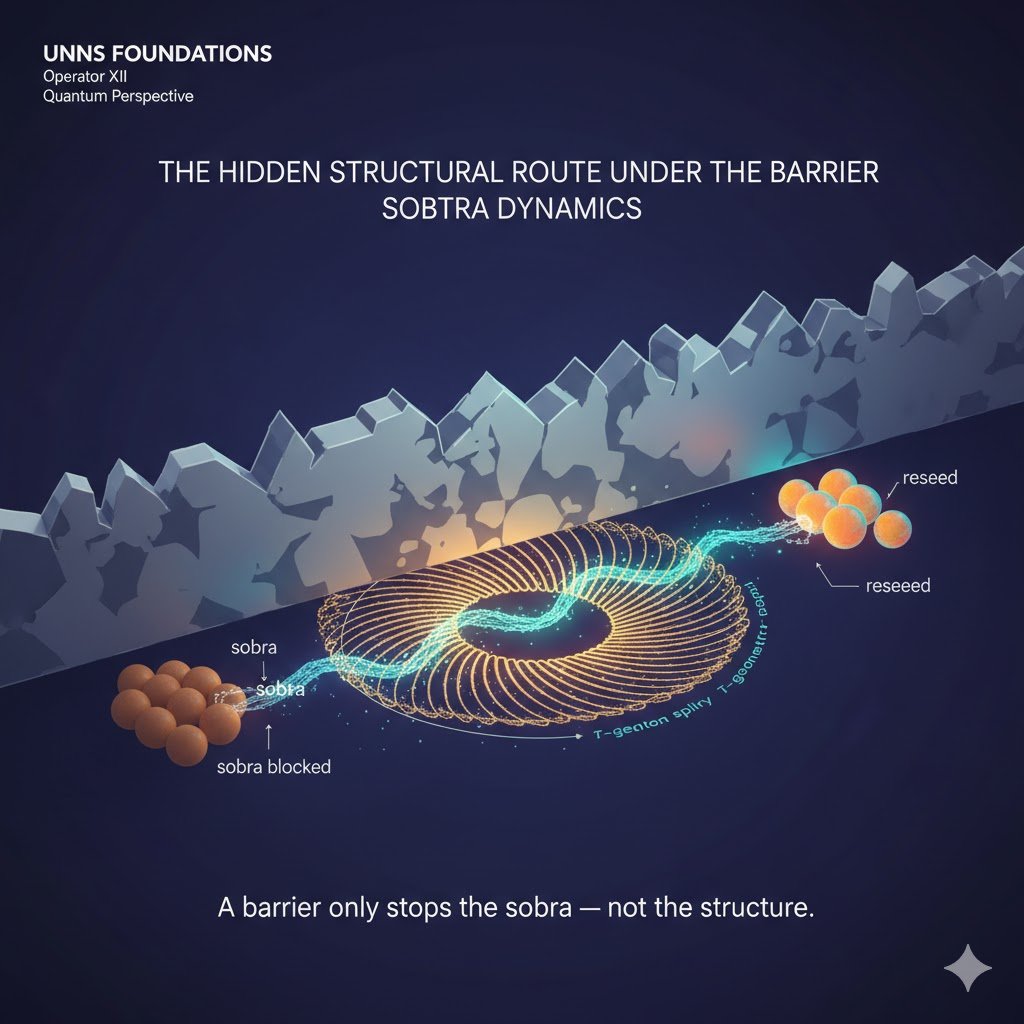
In UNNS, a barrier doesn’t stop a structure — it only stops the sobra. When Collapse selects the sobtra channel, the residue follows a torsion-driven micro-route that bypasses classical geometry entirely. This is the structural origin of tunneling.
Read more: The Hidden Structural Route Under the Barrier — Sobtra Dynamics
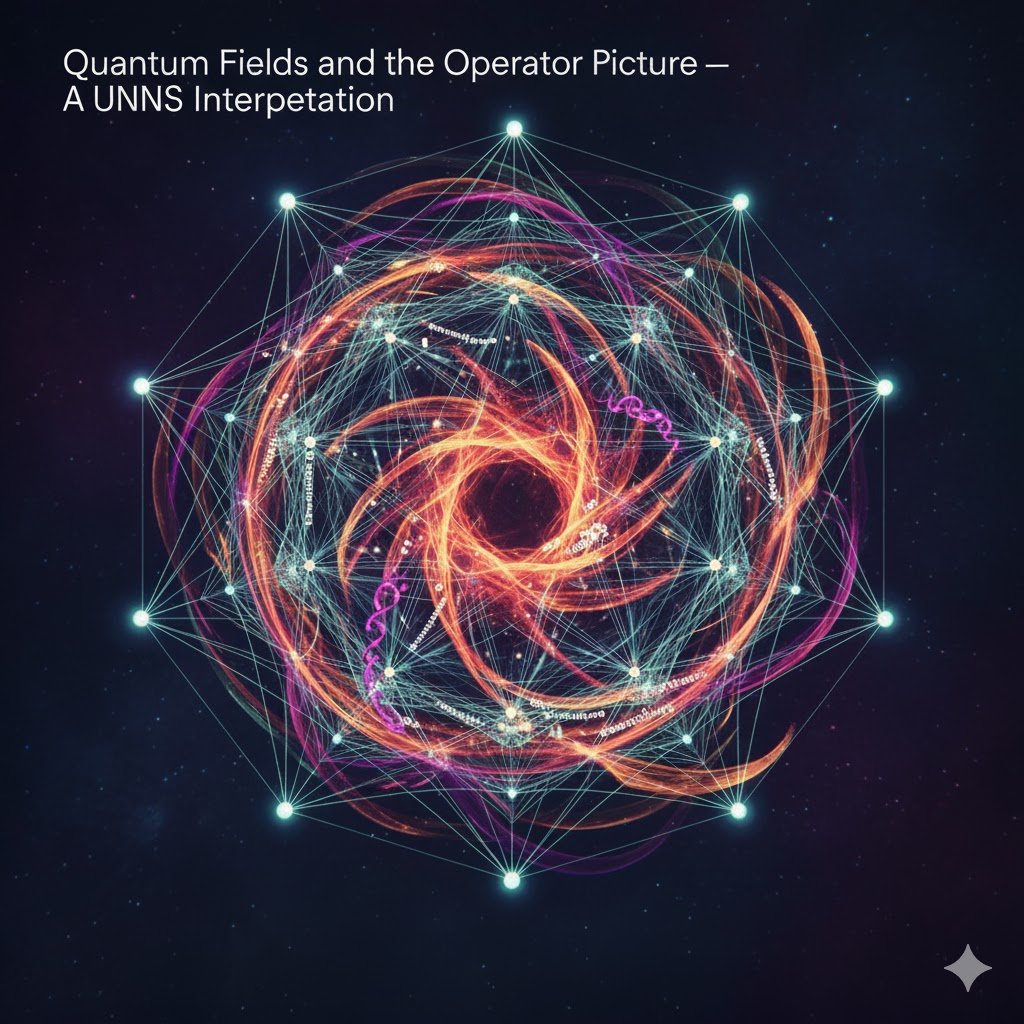
Quantum Field Theory is usually described as a theory of “operator-valued fields”. In the UNNS substrate, this becomes more precise: the world evolves not by moving states, but by transforming operators and residues. Collapse is the engine, operators are the grammar, and residues carry excitation across the substrate.
Read more: Quantum Fields and the Operator Picture — A UNNS Interpretation
Page 30 of 39