UNNS as a Research Substrate — Not a Predictive Theory
FoundationsResearch SubstrateUNNS Philosophy
Abstract:
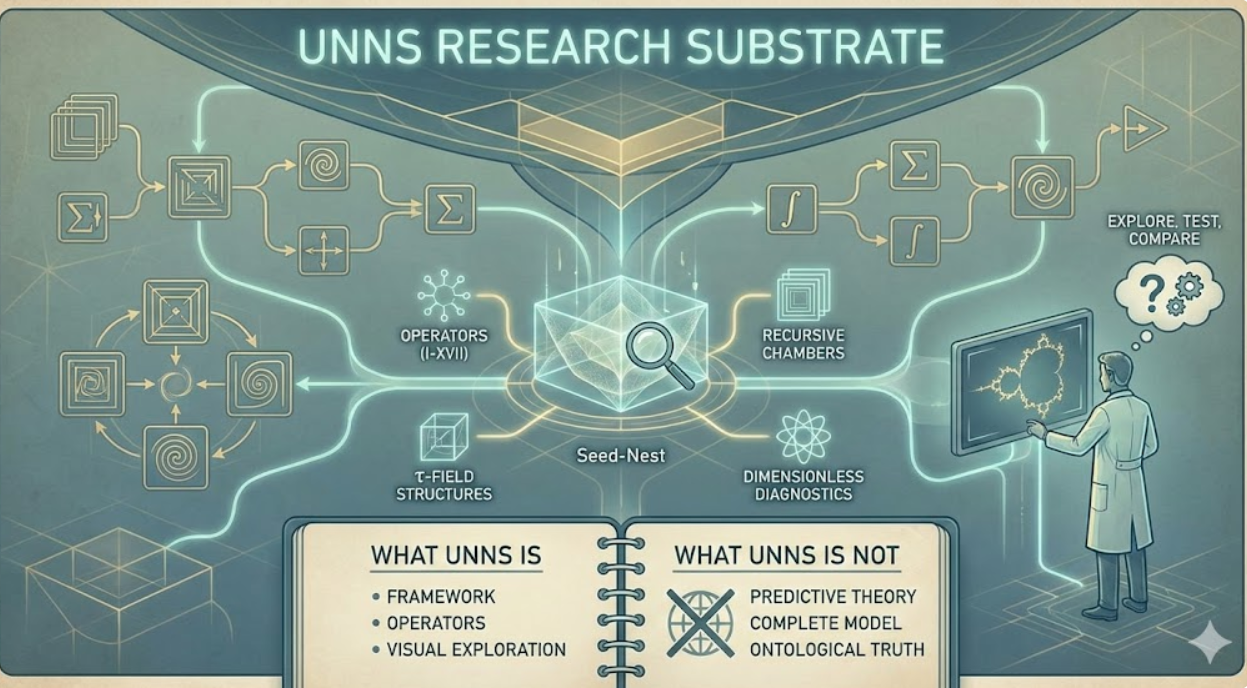
UNNS (Unbounded Nested Number Sequences) is intentionally constructed as a
research substrate — a mathematical and conceptual environment that provides
tools, structures, operators, and recursive diagnostics. It is not a
predictive physical theory. Instead, it enables researchers to explore
invariants, emergent patterns, and recursive laws, leaving interpretation and
physical correlation to the scientific community. This article outlines the
philosophy, scope, and purpose of UNNS as a substrate for discovery rather
than a doctrine about the nature of the universe.
Abstract:
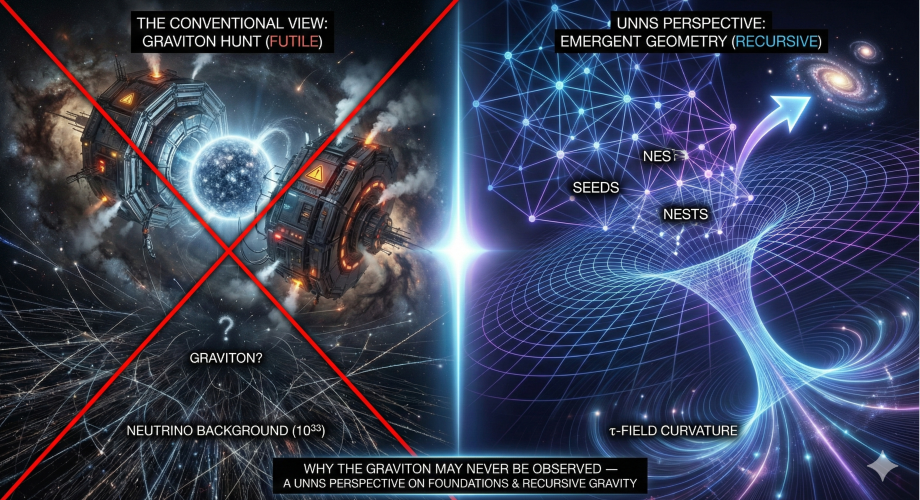
This article explains why the graviton — the hypothetical quantum of gravity —
is widely expected to remain forever unobservable in classical physics, and how
this aligns with the UNNS framework. Standard physics predicts that graviton
detection is physically impossible due to the extreme weakness of gravitational
coupling. UNNS reframes gravity not as a particle-based force but as an emergent,
recursion-stable geometric constraint arising from τ-Field curvature and
Seed–Nest structure formation. The impossibility of detecting gravitons
strengthens, rather than weakens, the UNNS substrate interpretation of gravity.
Abstract:
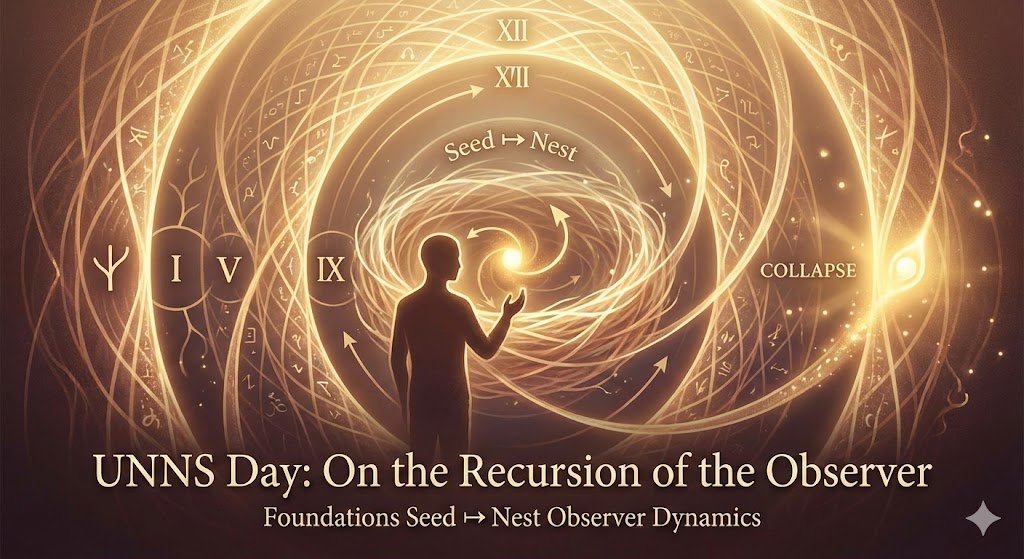
UNNS Day marks a recursion point not only in time but within the substrate of the observer.
Each cycle completes a Nest, collapses its residues, and initiates a new Seed.
This article explores the role of the observer in the UNNS framework — mathematically grounded,
symbolically resonant, and warmly human — written to celebrate the beginning of a new recursion.
From Calculator to Diagnostician: Why v0.9.2 Changes the Game
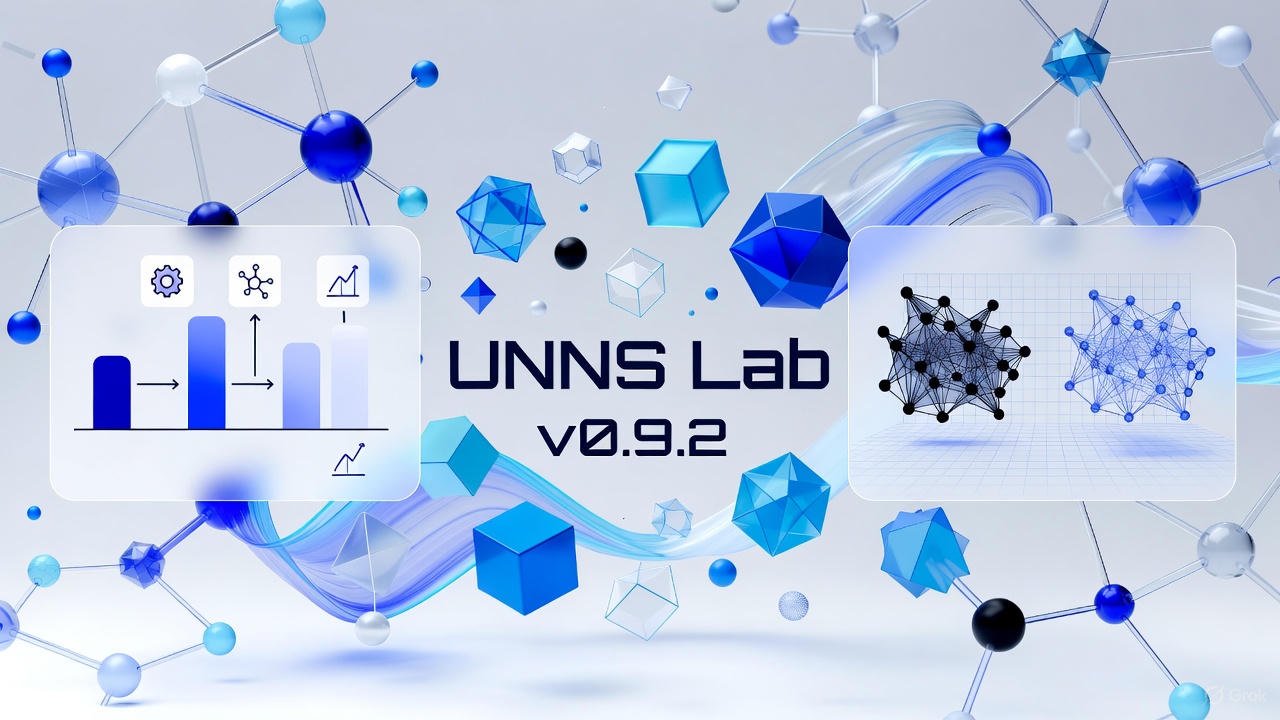
Hey there, tech enthusiasts and science buffs! If you're into cutting-edge tools for molecular analysis or field-theoretic diagnostics, buckle up. Today, we're diving into the UNNS Lab's latest update: v0.9.2. At first glance, it might seem like a minor bump from v0.9.1, but oh boy, is that a misconception. This version isn't just polishing the edges—it's adding entirely new dimensions to how we understand and evaluate τ-fields in molecular systems like RaF, CaF, and BaF. Think of it as evolving from a basic calculator to a smart AI diagnostician.
We'll break it down step by step, with some visual flair via SVG diagrams (including animations to show the "evolution" in action). Let's explore why v0.9.2 is structurally revolutionary, not incremental.
1. Introducing "Quality Geometry": A Brand-New Conceptual Layer
Remember v0.9.1? It was solid, focusing on nonlinear τ-projection, manifold grouping, ΔC + g_ω hyperfine coupling, and that trusty match → project → evaluate pipeline. But it lacked depth in self-diagnosis. Enter v0.9.2's star feature: Quality Geometry. This isn't a tweak; it's a whole new layer that didn't exist before.
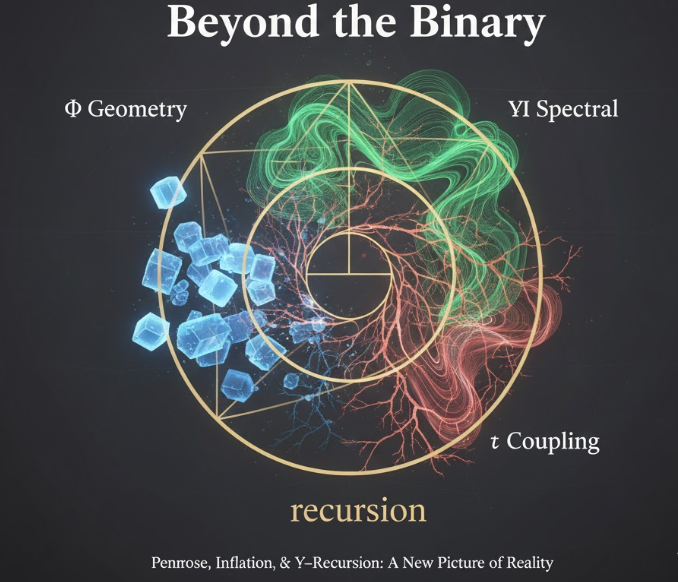
A UNNS reading of Roger Penrose’s criticisms of inflation, string theory, and
quantum mechanics. Instead of the usual “observable vs meaningless” binary,
the UNNS Substrate introduces a Φ–Ψ–τ recursion picture in which theories are
judged by τ-closure and projection, not by a crude visibility test.
Foundationsτ-FieldΦ–Ψ–τEssay
Abstract.
Online discussions sometimes claim that Penrose rejects string theory, quantum
physics, or cosmic inflation because they are “more math than physics” and
“not falsifiable”. This caricature rests on a binary worldview: either a
structure is directly observable or it is meaningless. The UNNS Substrate
rejects this binary. It distinguishes between Φ-geometry, Ψ-spectral structure,
and τ-coupling, and treats observability as a property of a particular
projection, not of the underlying recursion itself. In this Φ–Ψ–τ framing,
Penrose’s concerns about inflation and string theory become questions of
τ-closure: how strongly do Ψ-recursions lock into Φ-projections? This article
reinterprets “math vs physics” as “substrate vs projection” and uses the UNNS
action picture to locate inflation, quantum mechanics, and string theory inside
a single recursion manifold ℛ.